
Sex Offender Checks in Sherman County
The Texas Public Sex Offender Registry is the first source for a Sherman County sex offender check. Texas DPS operates the public database under Code of Criminal Procedure Chapter 62. It can answer whether an official public profile matches a name or location. It also lets a reader move from a broad result list to the details reported by a registration authority.
Use the registry as a lead that needs careful comparison. A similar name is not enough. An address marker may reflect geocoding and the timing of a local update. The listed registration authority is the best office for a concern about stale information or possible noncompliance. For an address inside Stratford, that authority is city law enforcement. Outside a municipality, contact the Sherman County Sheriff. Neither office should be asked to confirm private fields that Chapter 62 withholds.
How to Search the Texas Public Sex Offender Registry
Begin with enough facts to separate people who share a name and to avoid treating a nearby address as proof. Sherman County users can take a name route or a place route. Location fields are especially useful for a community-wide view, but every result still needs profile-level review.
- Open the official DPS registry and choose a name or location search.
- Enter the known name, or narrow the location with Stratford, Sherman County, a ZIP code, or an address.
- Compare the result list without assuming a similar name or map point identifies the person or property.
- Open the official profile and compare its photograph, aliases, descriptors, registration status, address type, and offense information.
| Field Label | Type | Required | Notes |
|---|---|---|---|
| Last and first name | Text | Route-dependent | Use profile details to resolve similar names. |
| Address | Text or map | Route-dependent | Geocoding may be approximate. |
| City | Text or dropdown | Optional | Use Stratford for the incorporated city. |
| County | Dropdown | Optional | Select Sherman County. |
| ZIP | Text | Optional | Narrows a location search. |
| Map or list | View control | Optional | Changes presentation, not the source data. |
| Subscription | Account workflow | Optional | A public CRD account may be needed for notices. |
The manifest capture comes from the official Texas DPS registry interface.
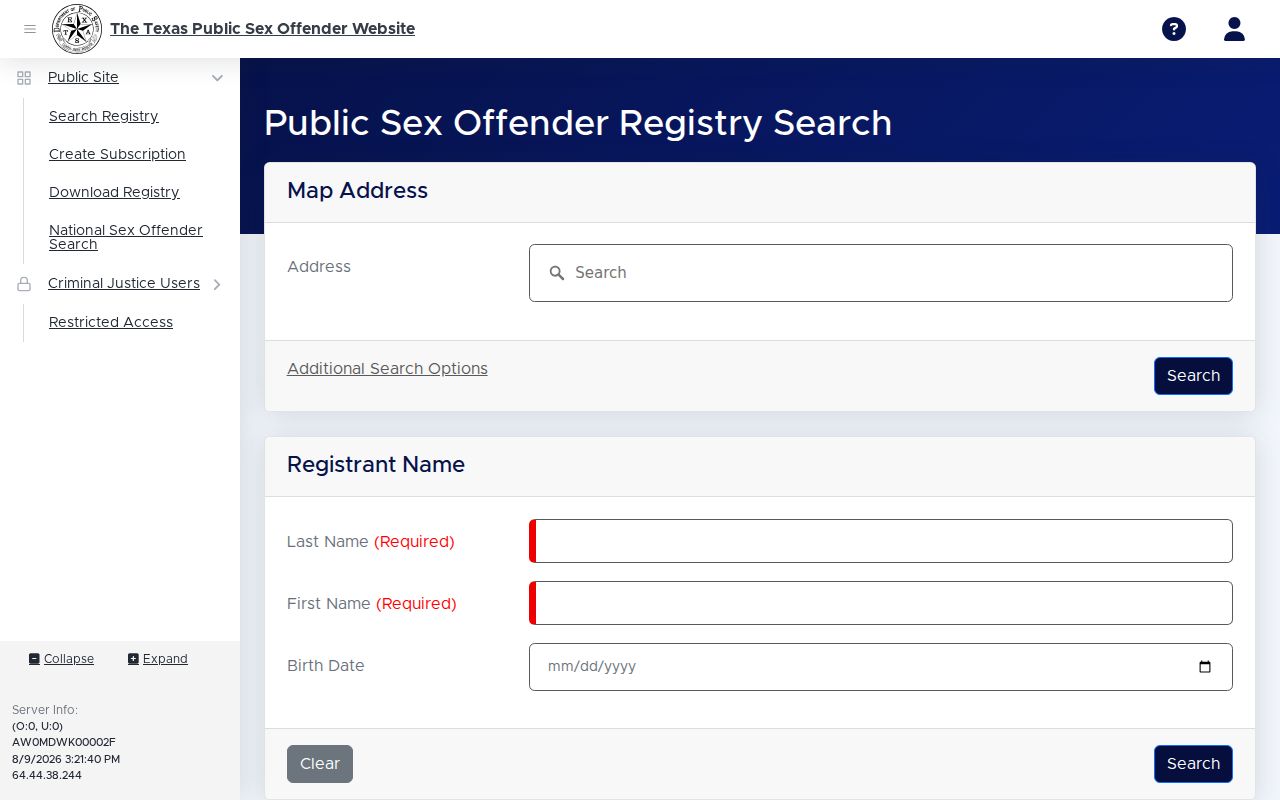
The interface shows why a search should move from a broad field set to a full official profile before any conclusion is drawn.
Sherman County Registry Map Limits
A registry map is useful for orientation, not property-level certainty. Address pins may be placed through automated geocoding. Update timing can also create a gap between a reported change, local verification, and the public display. The map therefore shows where to look next. It does not establish who owns a home, who is present at a given moment, or whether an address marker is exact.
Open the profile tied to the marker. Compare the listed address type, registration status, photograph, aliases, and physical details. If the address appears stale, contact the registration authority named on the official record. Sherman County residents should not visit the address or conduct their own surveillance. A factual report to law enforcement gives the responsible office a chance to verify the data through its authorized process.
Inside a Registry Profile
A public profile combines identifying details, registration data, and the reportable offense information DPS is allowed to publish. Not every row appears in every case. For example, vehicle information is public only under statutory conditions for specified offenses, and a juvenile court can order some juvenile registration information nonpublic.
| Name and aliases | Published names used to compare a possible match. |
|---|---|
| Photo and description | Photograph plus displayed sex, race, age or birth information, height, weight, hair, eyes, scars, marks, or tattoos. |
| Registered address | Public residence information and address type as reported. |
| Offense information | Reportable offense, statute, and conviction or adjudication date. |
| Authority and status | Registration authority, current status, and any risk designation the system supplies. |
| Conditional fields | Institution or vehicle details when Chapter 62 makes them public. |
Read each field as part of the same record. A photograph can help distinguish names, while the status and authority identify which office should receive a correction or compliance concern.
Sherman County Registry Privacy Limits
Chapter 62 makes most registration information public, but it does not open the whole local file. Texas DPS identifies Social Security numbers, driver-license numbers, phone numbers, online identifiers, employer contact information, victim-identifying information, and other confidential material as nonpublic. Those limits protect victims and personal data while preserving the fields used for community awareness.
The DPS registration program overview explains how local maintenance, school notice, public release, and state submission fit together.
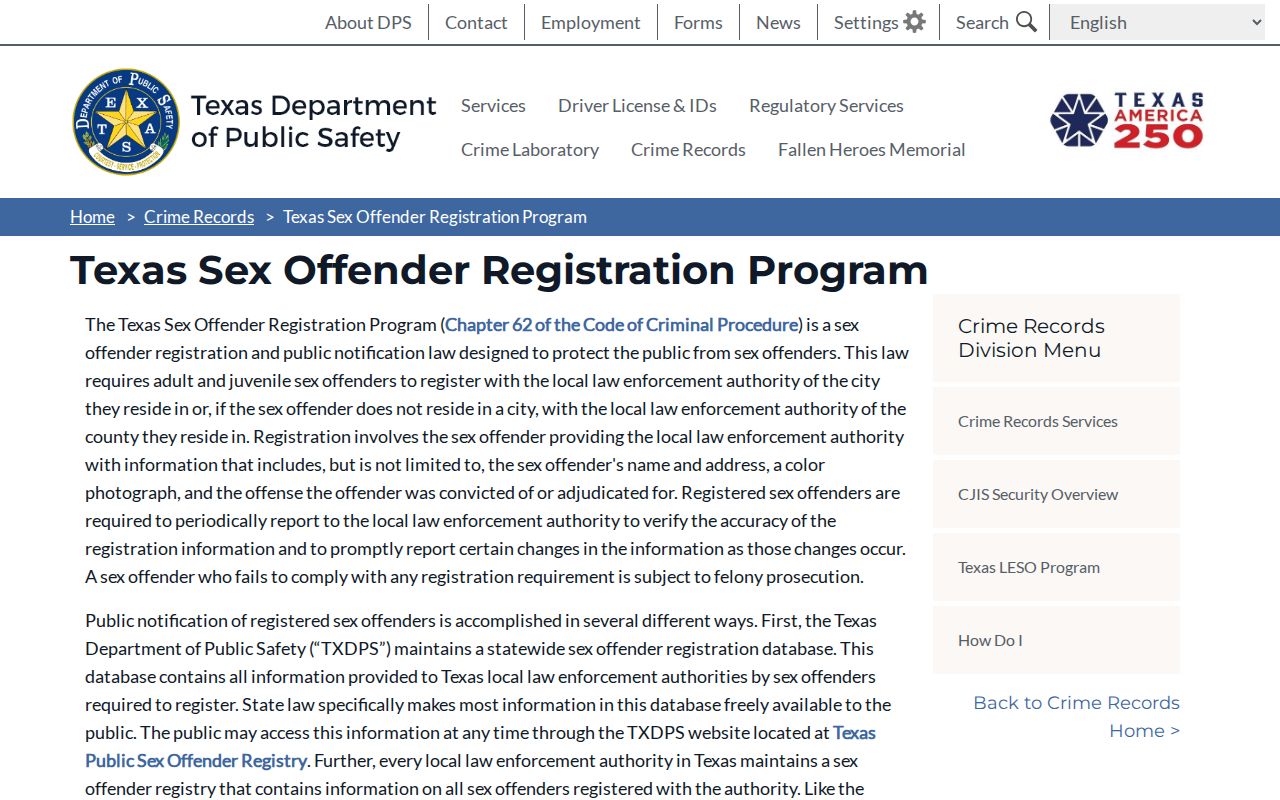
The program material helps separate the public registry profile from confidential registration data held by DPS and the local authority.
Texas Registration Levels and Requirements
Texas does not present its public registry as a simple federal Tier I, II, and III chart. Duration turns on the specific reportable conviction or adjudication and the categories in Chapter 62. The law includes lifetime duties for the statutory lifetime group and generally a ten-year post-discharge duty for the other group. Discharge can depend on release from confinement, parole, or completion of supervision.
| Texas framework | Duration | Verification |
|---|---|---|
| Statutory lifetime category | Lifetime registration | Frequency depends on the Chapter 62 classification. |
| Other reportable category | Generally ten years after discharge | Often annual, subject to the governing provision. |
| Higher-risk statutory categories | Offense and status dependent | Some categories verify every 90 days. |
Repeat offenses and sexually violent offenses can have special effects. Use the current Code of Criminal Procedure Chapter 62 and the official profile instead of assigning a federal tier label to a Texas record.
Sherman County Texhoma Registry Search
Texhoma crosses the Texas and Oklahoma line. A Texas DPS search covers Texas submissions and cannot stand in for a cross-state registry check. Start with the Texas registry when the address lies in the Texas portion, then repeat the location search through the U.S. Department of Justice system.
The Dru Sjodin National Sex Offender Public Website supplies that cross-jurisdiction layer.
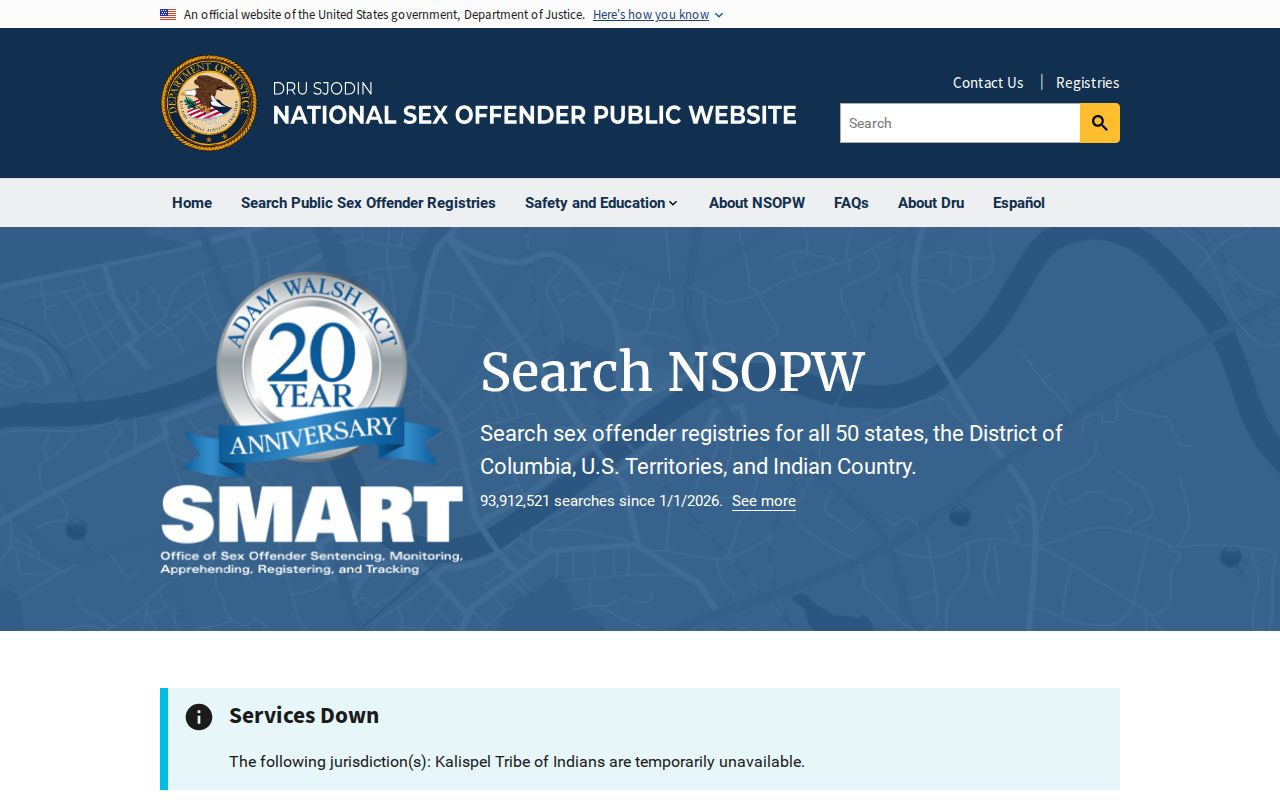
The national interface routes a Texhoma search across participating jurisdictions, which helps avoid treating the state line as the edge of the community.
Sherman County Registry Notifications
Public notice can occur through the statewide registry, a local registry, lawful local publication, school notice, and mailed notice for high-risk offenders or civilly committed sexually violent predators. The DPS public portal also supports account features for subscriptions or notifications. Availability and setup can change, so follow the current account prompts rather than assuming that an address alert is automatic.
Notification is meant to support calm safety planning. Save the official profile date and identify the listed registration authority if a fact seems wrong. For children, schools, or a shared community space, use the verified public information to set practical boundaries without spreading private claims or confronting a listed person.
Community Notification and Lawful Use
Registry information is public for awareness and safety. It is not proof that a person is at an address at a particular moment, and it does not authorize private enforcement. If a Sherman County profile appears outdated or a required report may have been missed, give the registration authority the name, profile, address concern, and the facts personally observed. Let that office check compliance.
Use registry data lawfully: Harassing, threatening, intimidating, or using registry information to commit a crime is unlawful under Texas Code of Criminal Procedure Chapter 62.
Do not confront anyone or publish extra personal details. For a Stratford address, report the concern to city law enforcement. For an unincorporated Sherman County address, call the sheriff. An urgent threat belongs with emergency services, while a data or compliance question belongs with the office responsible for registration.